




To observe is to grow
From the moment they are born until they are five years old, a child experiences and observes their development every day. This little being gradually transforms. Their size and body change, and their behavioral abilities and knowledge also evolve in a fairly natural way.
This unconscious learning is carried out thanks, in particular, to mirror neurons: the support of learning through imitation. These neurons are activated when we observe the activity of others. Then we perform the same action as them by imitating each of their actions and gestures.
Mirror neurons are connected to many parts of the brain, allowing us to understand an individual’s feelings and emotions. This empathy is a necessary condition for group cohesion and survival and is therefore important for a child’s development and well-being at every stage of life.
Furthermore, the child’s environment plays a key role because mirror neurons are only activated if this environment is rich.
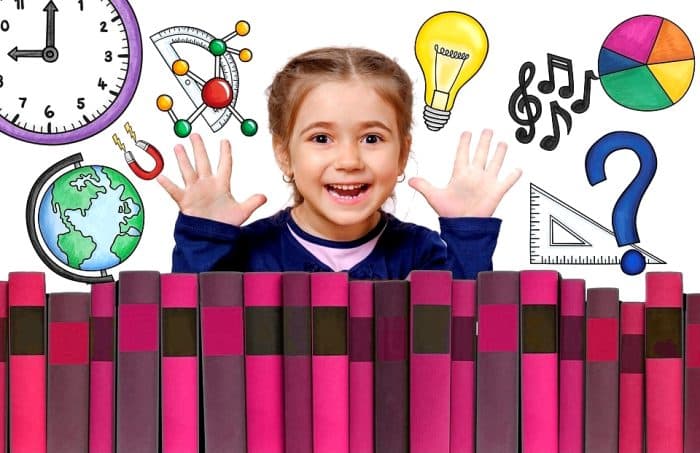
Introducing children to science from kindergarten onwards: curiosity, observation and discovery of the world
We therefore believe that it is important to introduce children to life and earth sciences from a very young age because they implement very early on, even before they have language, the processes of relating to the world which are those of science.
Their real driving force seems to be curiosity! In kindergarten, children discover the world around them, learn to use spatial and temporal references, observe, ask questions and learn to adopt a point of view other than their own.
School is the ideal place for young children to become familiar with objects, phenomena, processes, and roles. Children discover the world at school; they take a curious and inventive look at their environment, while “experimenting with the tools of intellectual work” that will allow them to reason and study phenomena later on.
Through his observations and explorations, the student builds up a repertoire of experiences to which he can then refer throughout his life.
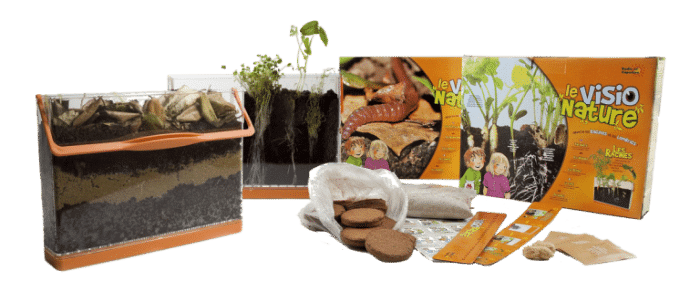
These experiments are based on real phenomena such as seeds germinating, for example.
We then understand that the activities carried out at school in the areas of discovery of the world generate the development of language because the child uses the tools of work and builds, at the same time, language skills necessary for their description.